‘An attempt to study the inventory of alternatives’
Research themes
My research is organised into eight themes. Under each theme, work in progress is listed first, papers closest to publication at the top, each with its current status. Published work sits behind the dropdown, with full citations. Google Scholar has a complete list of my publications.
23 papers in the pipeline: 15 submitted 5 R&R 3 accepted
Each working paper is also available as a Markdown file, which is easier for AI assistants and other automated readers to process than a PDF.
ReFourie: I asked a team of language models to replicate, audit and re-estimate thirty of my published papers. The page describes how, what it cost, and what they found, paper by paper.
Slavery and emancipation
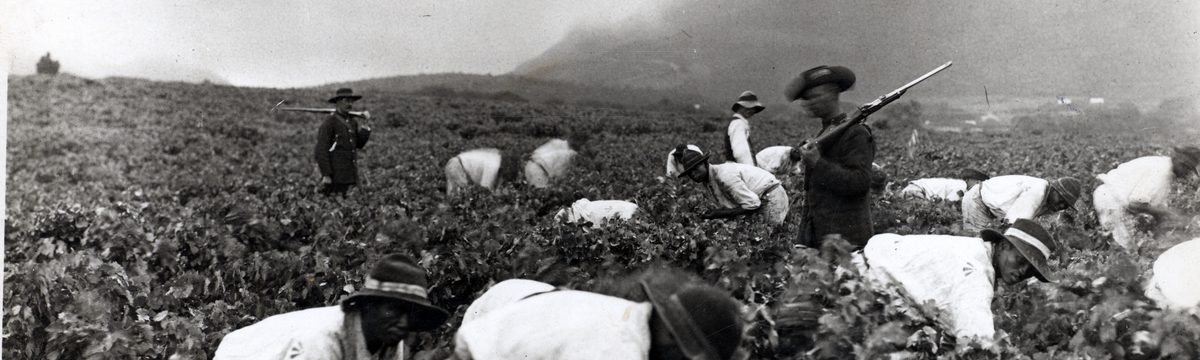
How slavery shaped the Cape economy, and what freedom, when it came, was worth.
- Accepted The New Economics of Cape Slavery · South African Journal of Economics · Working paper (md)
- Accepted Selection into the Great Trek with Calumet Links · European Review of Economic History · Working paper (md) · Replication package
Published work (3)
- Bergemann, Karl, Gabriel Brown, and Johan Fourie. 2026. “Running Towards: Labour Market Incentives for Runaway Slaves in the British Cape Colony, 1830–1838.” Asia-Pacific Economic History Review. Paper
- Martins, Igor, Jeanne Cilliers, and Johan Fourie. 2023. “Legacies of Loss: The Health Outcomes of Slaveholder Compensation in the British Cape Colony.” Explorations in Economic History 89: 101506. Paper
- Ekama, Kate, Johan Fourie, Hans Heese, and Lisa-Cheree Martin. 2021. “When Cape Slavery Ended: Introducing a New Slave Emancipation Dataset.” Explorations in Economic History 81: 101390. Paper

Wealth, inequality and mobility at the Cape
Tax censuses, auction rolls and probate inventories reveal who prospered in the colonial Cape, and how.
- R&R Between Public Duty and Private Profit: Government Officials and Real Estate Investments in the Cape Colony, 1897–1902 with Munashe Chideya · Enterprise & Society · Working paper
- R&R Biplots and Classification: Measuring Household Economic Systems at the Cape Colony with Sugnet Lubbe, Johané Nienkemper-Swanepoel and Dieter von Fintel · Historical Methods
- Submitted The Household in a Coercive Society: Evidence from South Africa’s Cape Colony · Working paper (md)
- Submitted The Poor Fund as Lender: Church Credit and Agricultural Production in the Cape Colony, 1686–1829 with Jacques Theron · Working paper (md)
Published work (15)
- Walters, Leoné, Jonathan Schoots, and Johan Fourie. 2026. “Prices and Living Standards: Evidence from Cape Colony Auction Rolls.” Cliometrica. Paper
- Walters, Leoné, Johan Fourie, and Robert Ross. 2026. “Colonial Elites in the Eighteenth-Century Cape Colony.” Revista de Historia Industrial – Industrial History Review. Paper
- Fourie, Johan. 2025. “Inequality in the Cape Colony, 1685–1844.” South African Journal of Science 121 (11-12): 71–79. Paper | Code | Updated Working Paper
- Fourie, Johan, Erik Green, Auke Rijpma, and Dieter von Fintel. 2025. “Income Mobility Before Industrialization: Evidence from South Africa’s Cape Colony.” Social Science History 49 (1): 22–51. Paper
- Fourie, Johan, Erik Green, Christiaan Burger, Chris de Wit, Kate Ekama, Jan Greyling, Hans Heese, Jan-Hendrik Pretorius, Robert Ross, and Dieter von Fintel. 2025. “‘Waar Is Beter Dorp in Zuid Africa Dan Stellenbos?’: What the Stellenbosch-Drakenstein Tax Censuses Reveal.” South African Historical Journal 76 (4): 420–46. Paper
- Fourie, Johan, and Jan Greyling. 2023. “Wheat Productivity in the Cape Colony in 1825: Evidence from Newly Transcribed Tax Censuses.” Agrekon 62 (1): 98–115. Paper
- Fourie, Johan, and Frank Garmon Jr. 2023. “The Settlers’ Fortunes: Comparing Tax Censuses in the Cape Colony and Early American Republic.” The Economic History Review 76 (2): 525–50. Paper
- Von Fintel, Dieter, and Johan Fourie. 2019. “The Great Divergence in South Africa: Population and Wealth Dynamics over Two Centuries.” Journal of Comparative Economics 47 (4): 759–73. Paper
- Baten, Joerg, and Johan Fourie. 2015. “Numeracy of Africans, Asians, and Europeans During the Early Modern Period: New Evidence from Cape Colony Court Registers.” The Economic History Review 68 (2): 632–56. Paper
- Fourie, Johan, and Erik Green. 2015. “The Missing People: Accounting for the Productivity of Indigenous Populations in Cape Colonial History.” The Journal of African History 56 (2): 195–215. Paper
- Fourie, Johan, and Dieter von Fintel. 2014. “Settler Skills and Colonial Development: The Huguenot Wine-Makers in Eighteenth-Century Dutch South Africa.” The Economic History Review 67 (4): 932–63. Paper
- Fourie, Johan. 2014. “The Quantitative Cape: A Review of the New Historiography of the Dutch Cape Colony.” South African Historical Journal 66 (1): 142–68. Paper
- Fourie, Johan, and Jan Luiten van Zanden. 2013. “GDP in the Dutch Cape Colony: The National Accounts of a Slave-Based Society.” South African Journal of Economics 81 (4): 467–90. Paper
- Fourie, Johan. 2013. “The Remarkable Wealth of the Dutch Cape Colony: Measurements from Eighteenth-Century Probate Inventories.” The Economic History Review 66 (2): 419–48. Paper
- Fourie, Johan, and Dieter von Fintel. 2010. “The Dynamics of Inequality in a Newly Settled, Pre-Industrial Society: The Case of the Cape Colony.” Cliometrica 4 (3): 229–67. Paper
Twentieth-century South Africa
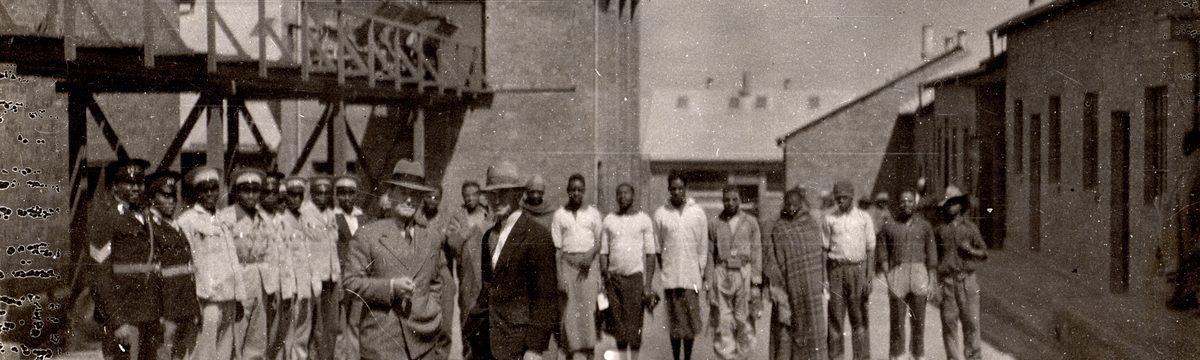
The economics of segregation and apartheid: who paid, who benefited, and what persisted.
- Submitted When Do Colonial Institutions Persist? Evidence from Two School Systems in South Africa with Sarah Ferber and Gabriel Brown · Working paper (md)
- Submitted Unequal Terms: Ethnic Discrimination in Contract Allocation with Kris Inwood and Martine Mariotti
Published work (3)
- Fourie, Johan, Kris Inwood, and Martine Mariotti. 2022. “Living Standards in Settler South Africa, 1865–1920.” Economics & Human Biology 47: 101158. Paper
- Fourie, Johan, Kris Inwood, and Martine Mariotti. 2020. “Military Technology and Sample Selection Bias.” Social Science History 44 (3): 485–500. Paper
- Mpeta, Bokang, Johan Fourie, and Kris Inwood. 2018. “Black Living Standards in South Africa Before Democracy: New Evidence from Height.” South African Journal of Science 114 (1-2): 1–8. Paper
Health, disease and demography
Epidemics and their economic afterlives, from the 1713 smallpox at the Cape to the 1918 influenza.
- Submitted A Disease Never Seen Here: Measuring the Severity of the 1713 Smallpox Epidemic at the Cape
Published work (6)
- Fourie, Johan, and Johannes Norling. 2025. “Household Spending During the 1918 Influenza Pandemic.” Journal of Interdisciplinary History 55 (3): 369–413. Paper
- Fourie, Johan, and Johannes Norling. 2024. “Women’s Employment in the United States After the 1918 Influenza Pandemic.” Essays in Economic & Business History 42 (1): 38–58. Paper
- Marco-Gracia, Francisco J., and Johan Fourie. 2022. “The Missing Boys: Understanding the Unbalanced Sex Ratio in South Africa, 1894–2011.” Economic History of Developing Regions 37 (2): 128–46. Paper
- Marco-Gracia, Francisco J., and Johan Fourie. 2022. “The Crossover Point: Measuring the Age at Which Women Outnumber Men in South Africa, 1904–2011.” Southern African Journal of Demography. Paper
- De Kadt, Daniel, Johan Fourie, Jan Greyling, Elie Murard, and Johannes Norling. 2021. “Correlates and Consequences of the 1918 Influenza in South Africa.” South African Journal of Economics 89 (2): 173–95. Paper
- Fourie, Johan, and Jonathan Jayes. 2021. “Health Inequality and the 1918 Influenza in South Africa.” World Development 141: 105407. Paper
Sports and tourism economics
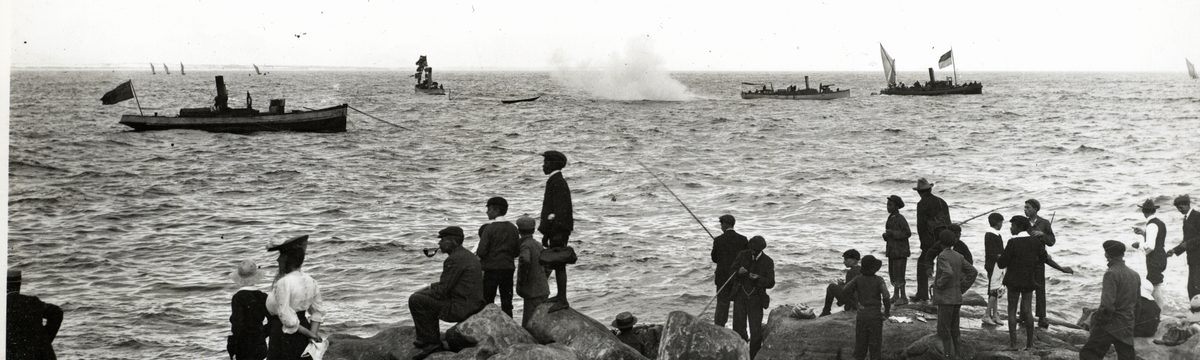
Cricket, mega-events and destination brands: what sport and travel reveal about how markets work.
- R&R Invisible Handedness: The Myth of Left–Right Batting Partnerships with Krige Siebrits · Journal of Sports Economics · featured in Nature
- Submitted Revealed Comparative Advantage in Team Sport: Classifying Cricket’s All-Rounders with the Balassa Index
- Submitted Faster, Higher, Stronger? Political Selection and the Olympic Host Contract
- Submitted The Decline of the Follow-On in 125 Years of First-Class Cricket · Working paper (md) | Supplementary file (md)
- Submitted Hunting in Pairs: Testing for Coworker Effects in Professional Cricket · Working paper (md)
Published work (2)
- Fourie, Johan, and María Santana-Gallego. 2022. “Mega-Sport Events and Inbound Tourism: New Data, Methods and Evidence.” Tourism Management Perspectives 43: 101002. Paper
- Santana-Gallego, María, and Johan Fourie. 2022. “Tourism Falls Apart: How Insecurity Affects African Tourism.” Tourism Economics 28 (4): 995–1008. Paper
The practice of economics and economic history
How economic history is made and used: applied history, and what the discipline chooses to study.
- Accepted Path Dependence in Economic History Publications · Cliometrica · Working paper (md)
- R&R Through the Prism of the Past: Principles for Applied Economic History with Chris Colvin · Explorations in Economic History · Working paper
- Submitted LLMs and Economic History: A Comment on Ferrara (2026)
- Submitted The Dismal State of the Dismal Science in South Africa · Working paper (md)
Published work (4)
- Fourie, Johan. 2026. “From Renaissance to Relevance: Towards an Applied African Economic History.” Economic History of Developing Regions. Paper
- Fourie, Johan. (ed.) 2023. Quantitative History and Uncharted People: Case Studies from the South African Past. Bloomsbury Publishing. Edited book
- Fourie, Johan. 2022. Our Long Walk to Economic Freedom: Lessons from 100,000 Years of Human History. Cambridge University Press. Book
- Fourie, Johan. 2016. “The Data Revolution in African Economic History.” Journal of Interdisciplinary History 47 (2): 193–212. Paper
The economics of science
How research gets produced, certified and rewarded, and what AI is doing to all three.
- Submitted Writing Is Not Thinking · Working paper (md) | Supplementary file (md)
- Submitted The Value of Peer Review and the Reward to Reputation · Working paper (md)
- Submitted The Price of Submission · Working paper (md)
- Submitted The Scientist in the Machine Age · Working paper (md)

Trade, mobility and deep roots
Trade routes, transport costs and the long shadow of migration on how people connect.
- R&R Uprooted: Migration, Coercion, and the Roots of Social Connectedness · Economic Inquiry · Working paper (md) | Supplementary file (md)
Published work (3)
- Maravall, Laura, Jörg Baten, and Johan Fourie. 2023. “Leader Selection and Why It Matters: Education and the Endogeneity of Favouritism in 11 African Countries.” Review of Development Economics 27 (3): 1562–1604. Paper
- Herranz-Loncán, Alfonso, and Johan Fourie. 2018. “‘For the Public Benefit’? Railways in the British Cape Colony.” European Review of Economic History 22 (1): 73–100. Paper
- Boshoff, Willem H., and Johan Fourie. 2010. “The Significance of the Cape Trade Route to Economic Activity in the Cape Colony: A Medium-Term Business Cycle Analysis.” European Review of Economic History 14 (3): 469–503. Paper
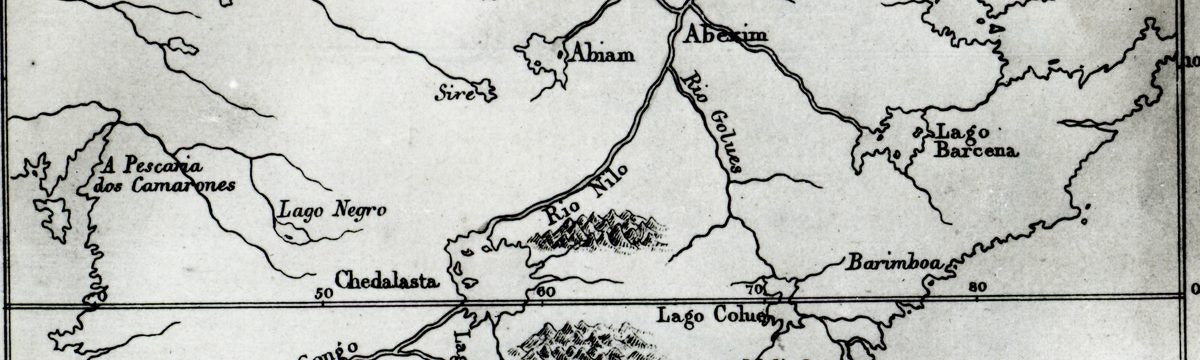
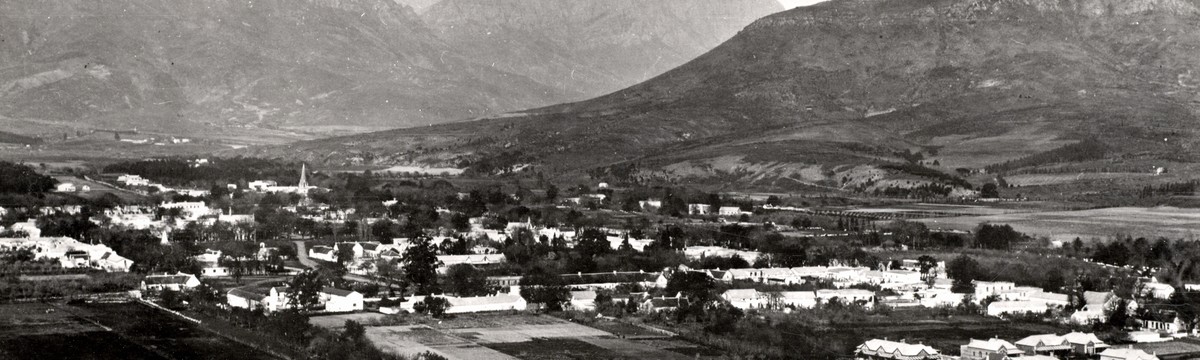
Theme photographs from the Elliot Collection and AG photograph series, reproduced with acknowledgement to the Western Cape Archives and Records Service.
Research overview
I did not choose economic history; it chose me. It began, improbably, with a paper on ship traffic at the Cape and a Lisbon conference audience of three. There I met the economic historian Jan Luiten van Zanden and that conversation sent me to Utrecht University to do a PhD in Economic History. I completed it in 2012, using probate inventories and the Cape tax censuses to study the nature, causes, and distribution of wealth in the eighteenth-century Cape Colony.
That early work left me with a bias that still shapes everything I do: if you want to understand how societies change, you need evidence that is granular enough to surprise you. Quantitative records can do that. They can also puncture comfortable myths. In my case, the probate inventories and tax censuses made it hard to sustain the old story of a uniformly poor settler society.
The Cape of Good Hope Panel project is a direct descendant of that realisation. It is an ambitious effort to transcribe the full series of the opgaafrolle and to turn them into a household panel that can be followed over time, and, when matched to genealogies, across generations. The aim is not just a bigger spreadsheet. It is a new research infrastructure for South African history – one that can support questions we could not ask before, or could only ask impressionistically.
What have we learned so far? Two things can be true at once. The Cape was, on average, a wealthy society by the standards of its time, and it was also a severely unequal one. My work using probate inventories and tax censuses shows that many settler farmers were well-off, even in comparison to some of the wealthiest societies of the period. But the same sources also reveal how sharply that prosperity was distributed, within and between groups. And once you can measure wealth at the household level, the questions become harder, and better: how did elites maintain their advantage; which factors made mobility possible; what did “opportunity” mean in a society built on unfree labour.
The richness of the Cape records also makes it possible to widen the lens beyond the usual protagonists. Some of my work has tried to recover histories of people who are often absent from conventional archives, precisely because their lives were not written down in the places historians tend to look. It is not archival cosplay. It is an attempt to make the evidentiary base of South African history more representative, and therefore more useful.
Because of this interest in Africa’s past, I was pulled early into the African Economic History Network, founded in 2011. That community has shaped my research in two ways. First, it has kept me honest about parochialism. South Africa is endlessly interesting, but it is not the whole story. Second, it pushed me to think about who gets to write economic history, and which skills and incentives determine who participates. In my own writing I have argued that the “data revolution” in African economic history is real, but unevenly distributed, and that building capacity on the continent is part of the scholarly job. I reflected on these themes in my inaugural lecture in May 2022, using my own genealogy as a way of thinking about South Africa’s past through the lens of economic history.
More recently, my attention has shifted from building datasets and answering historical questions to thinking harder about how economic history can matter for the present. With Chris Colvin, I define applied economic history as the systematic, context-sensitive use of historical reasoning to illuminate contemporary policy problems – not by offering ready-made lessons, but by disciplining the analogies and narratives that policymakers and the public already use. Instead of beginning with a historical episode and asking why it happened, an applied approach starts with a current problem and works backwards, testing which parallels illuminate and which mislead.
This is also where my role as Chair in Economics, History and Policy comes in. My research uses extensive historical records and quantitative analysis to investigate the drivers of societal change in South African history, with an eye on what that can contribute to economic theory and policy-making now. The past does not provide a blueprint. It does provide an inventory of alternatives, and a way to argue about trade-offs with more humility and more evidence than the usual policy advice allows.
Peer review
Refereeing rarely shows up on a CV. I have written reports for the Quarterly Journal of Economics, the Review of Economics and Statistics, The Economic Journal, the Journal of Economic Growth, the Journal of Development Economics and the Journal of Economic History, among many others, and for nine journals in 2026 alone.
I also serve on the editorial boards of Economic History of Developing Regions, The History of the Family and the Journal of Comparative Economics.
Recent grants and awards
| Year | Grant / award | Grant number | Funder / body | Role |
|---|---|---|---|---|
| 2025 | Chancellor’s Award: Social Impact | - | Stellenbosch Unviersity | - |
| 2025-2027 | The Cape of Good Health? Death, disease and development disparities in the Cape Province, 1912 | CPRR240403211840 | South African National Research Foundation | PI |
| 2025 | Our Long Walk to Economic Freedom graphic novel | #8644 | Emergent Ventures | PI |
| 2024 | Interdisciplinary Research Prize | - | Stellenbosch University | Director |
| 2024 | Top Researcher Award | - | Stellenbosch University | - |
| 2021–2026 | Cape of Good Hope Panel project | M20-0041 | Riksbankens Jubileumsfond | Co-PI |
| 2018–2022 | Biography of an Uncharted People project | - | Mellon Foundation | PI |